-103x75.png)
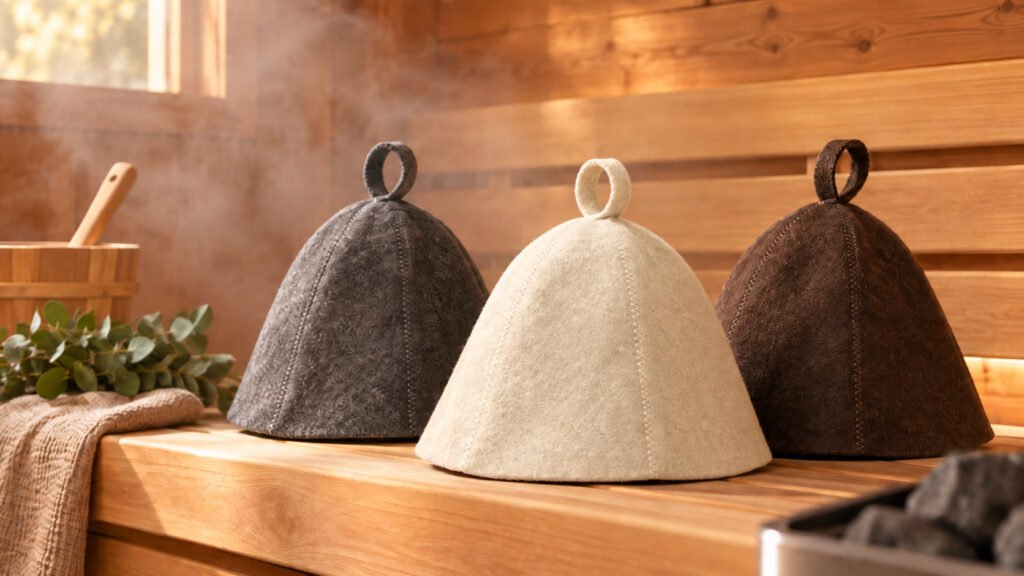
How Recovery & Wellness Brands Can Develop a Private Label Sauna Hat
For recovery, wellness and performance brands, a sauna hat can be more than a simple accessory.
It can become part of a broader recovery collection alongside sauna, cold plunge, fitness and wellness products.
But creating a private label sauna hat involves more than choosing a color and adding a logo. Material, fit, shape, embroidery, construction and minimum order quantity all affect how the finished product feels and how well it fits the brand.
For brands developing their first custom sauna hat collection, here are the main points to consider before sampling and production.
1. Start With Your Brand Positioning
Before discussing price or MOQ, define how the sauna hat should fit your brand.
A performance-focused recovery brand may want a very different product from a traditional sauna retailer.
Some brands prefer:
- Clean, minimal shapes
- Dark or muted colors
- Small, understated embroidery
- Structured construction
- Consistent sizing
- Premium but practical materials
The clearer the direction is before sampling, the easier it is for the supplier to develop the right product.
Providing reference images, logo files, preferred colors and basic dimensions can also make the first sample more accurate.
2. Choose the Right Wool Felt
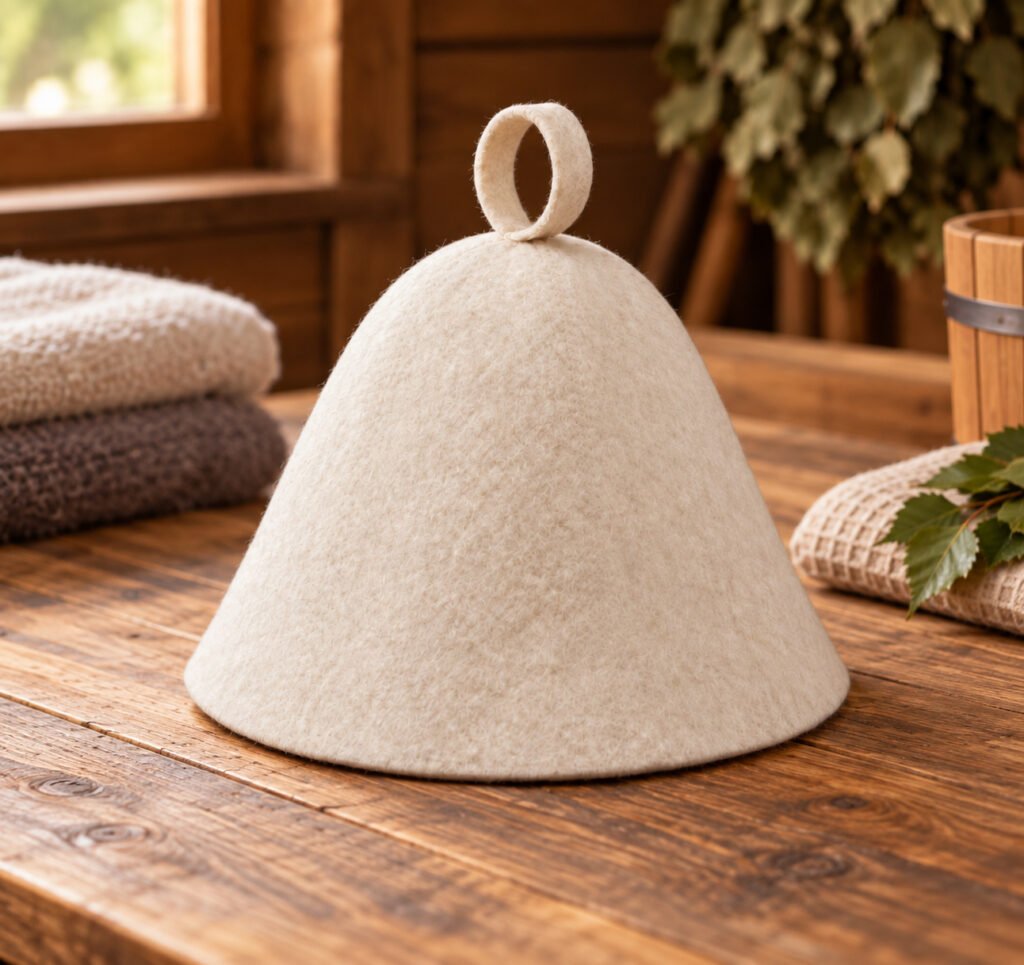
For brands looking for a natural and structured product, 100% wool felt is a common option for private label sauna hats.
Felt thickness affects both the feel and the shape of the finished product.
For a more structured appearance, buyers may prefer a wool felt that is firm enough to hold its shape without feeling excessively stiff.
Before sampling, it is useful to confirm:
- Material composition
- Felt thickness
- Firmness
- Surface texture
- Color availability
- Batch consistency
Because softness and stiffness are difficult to judge from photos alone, a physical sample is especially important.
3. Develop a Shape That Matches the Brand
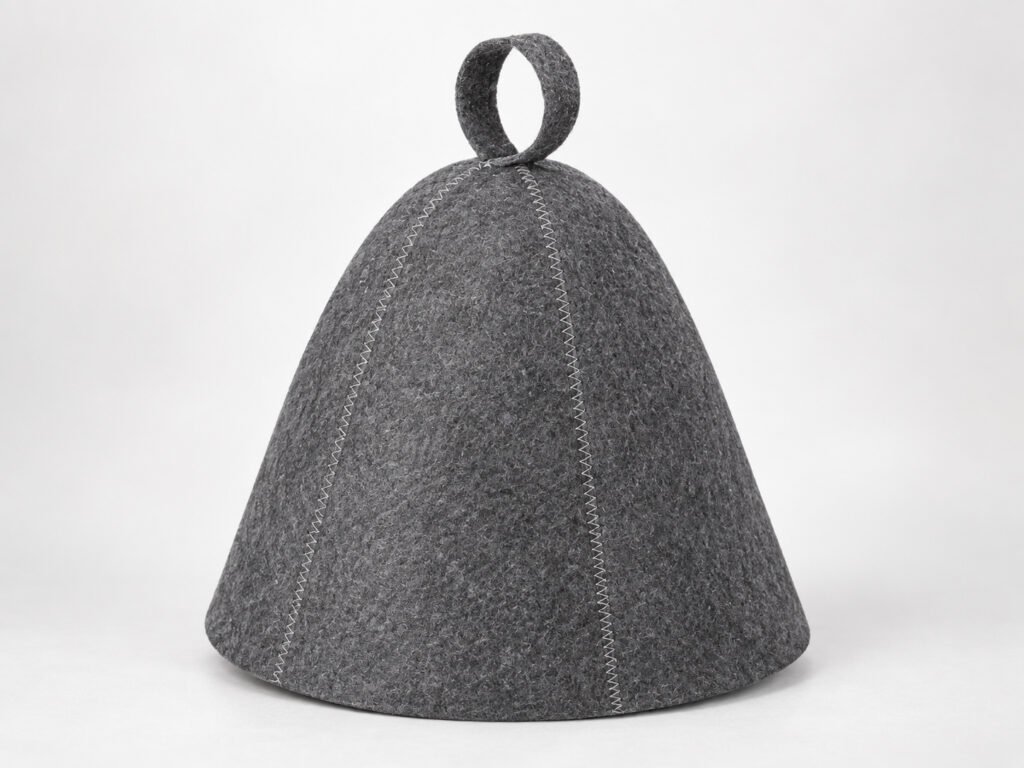
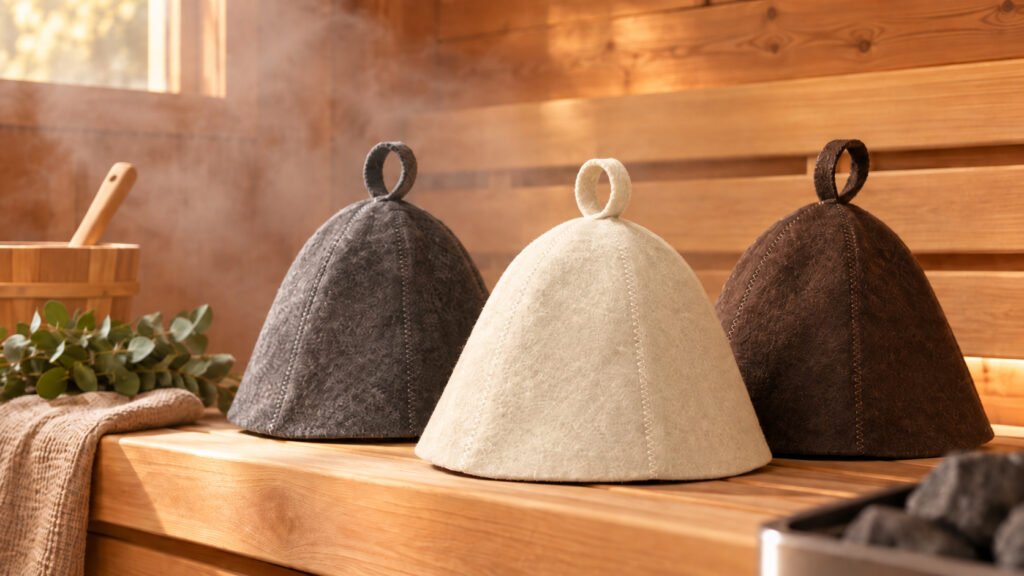
Sauna hats are available in many shapes, including bell, bucket and cylindrical styles.
For modern recovery and wellness brands, a cleaner silhouette may better match the overall brand identity.
A minimalist design might include:
- A balanced bell-shaped or custom silhouette
- Clean seam placement
- Consistent height and proportions
- A comfortable opening and fit
- A simple crown and hanging loop
Even small pattern changes can noticeably affect the final look.
That is why the shape should be confirmed during the sampling stage rather than after bulk production has started.
4. Confirm Size, Height and Internal Space
One-size designs are common for sauna hats, but the fitting range should still be clearly defined.
The supplier should confirm whether the selected pattern is suitable for the intended adult customer group.
Height is also important.
Some customers may want enough internal space to tie their hair underneath the hat, while others may prefer to fold the lower edge upward.
If the design allows the bottom edge to be folded, the hat should still provide enough internal space after folding.
Before production, buyers should confirm:
- Head circumference range
- Finished height
- Internal space
- Folded-edge position
- Fit after folding
- Logo position after folding
These details affect both comfort and the final appearance of the product.
5. Plan the Embroidery Around Real Use
Embroidery is one of the most visible elements of a private label sauna hat.
However, logo placement should be planned around how customers will actually wear the product.
If the bottom edge may be folded upward, the logo should normally sit above the fold zone so it remains visible.
A detailed embroidery brief can include:
- Font
- Font weight
- Letter height
- Logo width
- Line spacing
- Logo angle
- Thread color
- Position from the lower edge
For two-line logos or more complex designs, small positioning differences can noticeably change the final result.
Providing vector artwork can help the embroidery team reproduce the design more consistently.
6. Keep Branding Consistent With the Product
Not every recovery product needs large or bright branding.
For premium or minimalist brands, smaller embroidery and neutral thread colors often create a cleaner appearance.
Dark wool felt combined with cream, off-white or other subtle embroidery can create visible branding without making the product feel overly promotional.
For this type of product, embroidery quality and placement are often more important than simply making the logo larger.
7. Approve Colors Before Bulk Production
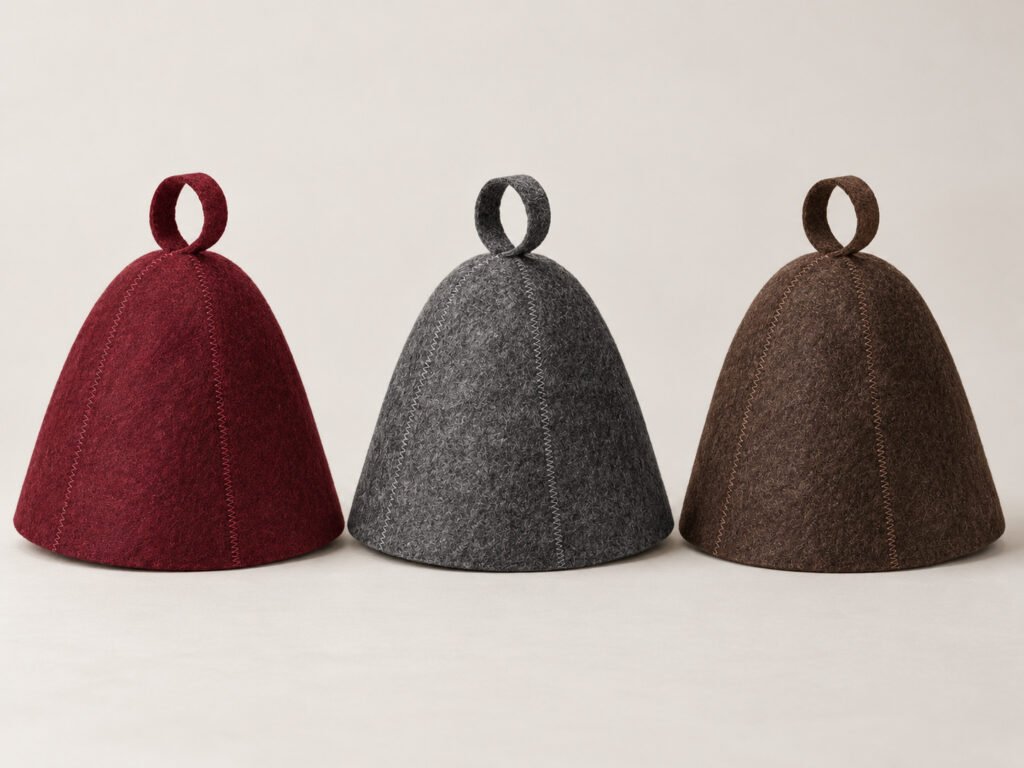
Digital color references are useful when communicating a design direction.
However, the color shown on a screen may not exactly match the final appearance of wool felt.
Material texture, lighting and dye lots can all affect the result.
This is particularly important when developing collections based on dark or muted colors.
Before bulk production, buyers should consider confirming:
- Available felt colors
- Physical color swatches
- Finished sample color
- Embroidery contrast
- Color consistency between batches
A physical material sample can help reduce misunderstandings before production.
8. Standardize Small Construction Details
Small details often have a large effect on perceived quality.
For sauna hats, buyers may want to standardize:
- Seam position
- Stitch consistency
- Overall symmetry
- Felt thickness
- Edge finishing
- Embroidery placement
- Hanging loop size
- Hanging loop attachment
A small hanging loop at the crown may seem like a minor detail, but inconsistent size or placement can make a product feel less refined.
Once the final sample is approved, these details should become part of the production reference.
9. Use Low MOQ to Test a New Product
Many emerging recovery and wellness brands do not want to begin with a very large order.
A typical development process may look like:
Sample → Small Launch → Customer Feedback → Reorder → New Colors or Collaborations
This is why MOQ flexibility can be important.
Before ordering, buyers can request pricing at several quantity levels, for example:
- Small trial order
- Medium launch quantity
- Larger repeat order
This makes it easier to understand both initial launch cost and future scaling cost.
For a new product category, starting with a smaller quantity can also reduce inventory risk while the brand tests customer demand.
10. Plan for Collaborations and Limited Editions
Recovery and wellness brands often collaborate with gyms, studios, trainers, events or other lifestyle brands.
This creates opportunities for co-branded sauna accessories.
A collaboration edition may include:
- Main brand logo
- Partner logo
- Custom embroidery layout
- Limited-edition color
- Small production quantity
If collaborations are part of the brand strategy, buyers should ask whether the supplier can support small-batch embroidery changes without requiring a very large MOQ.
The additional embroidery cost should also be confirmed before production.
11. Treat Sampling as Product Development
The first sample is not only a quality check.
It is part of the product development process.
A brand should use the sample to review:
- Fit
- Height
- Shape
- Material thickness
- Felt firmness
- Color
- Embroidery
- Logo position
- Seam consistency
- Hanging loop
Small adjustments during sampling are usually easier than correcting the same issue after mass production begins.
Before starting a project, buyers should also confirm:
- Sample cost
- Sample lead time
- Revision process
- Production lead time
- MOQ per color
- Packaging options
If the supplier has produced similar sauna hats before, reference photos can also help buyers evaluate construction and embroidery capability before requesting a custom sample.
Choosing the Right Private Label Sauna Hat Supplier
For recovery and wellness brands, the right supplier should offer more than an existing sauna hat with a logo added to it.
A suitable product development partner should be able to support areas such as:
- 100% wool felt options
- Custom sizing and patterns
- Low MOQ orders
- Custom embroidery
- Private label branding
- Multiple color options
- Small collaboration runs
- Custom packaging
- Sampling before bulk production
The goal is to create a sauna hat that feels consistent with the rest of the brand rather than like a generic accessory.
For emerging brands, this flexibility can make it easier to test a new product category without committing to unnecessarily large inventory.
Develop Your Private Label Sauna Hat With Mai Sauna
Mai Sauna supports overseas brands, retailers and distributors with custom sauna hat development, including wool felt options, embroidery, private label branding, packaging and small-batch project coordination.
Whether you are developing your first sauna accessory or expanding an existing recovery and wellness collection, we can help coordinate sampling and customization based on your project requirements.
Contact Mai Sauna to discuss your private label sauna hat design, MOQ, sampling requirements and customization options.